






While Superman launched the modern superhero era in Action Comics #1 and has been the hero of that title for almost all of its long run, the Man of Steel actually finds himself displaced — both in Action Comics and in the Superman comics titles more broadly — more often than most other heroes. And we’re gearing up for it to happen again with Reign of the Superboys, a big crossover event in which the various characters known as Superboy — but who aren’t actually Clark Kent — take center stage in a story whose title is lifted from Reign of the Supermen! (itself a story in which the Man of Steel was mostly absent).
To understand why this keeps happening, first, let’s take a look back at other instances when Superman disappeared from his own titles. Action Comics Weekly ran for over 40 issues, from Action Comics #601 through #642. During that time, Superman was no longer the lead feature in Action Comics, which became an oversized anthology featuring characters like Blackhawk, Green Lantern, Arsenal, and Nightwing. The experiment eventually ended and Superman got Action Comics back, leading into the “Triangle Era” of the Superman titles, during which time Action Comics, Superman, and The Adventures of Superman were joined by Superman: The Man of Steel to make a functionally-weekly story.
That wasn’t the last time Superman exited his own titles, though, and while Action Comics Weekly was seemingly an experimental proving ground for characters who didn’t have their own comic, later stories that took the Man of Steel out of his own comics were more narrative-driven.
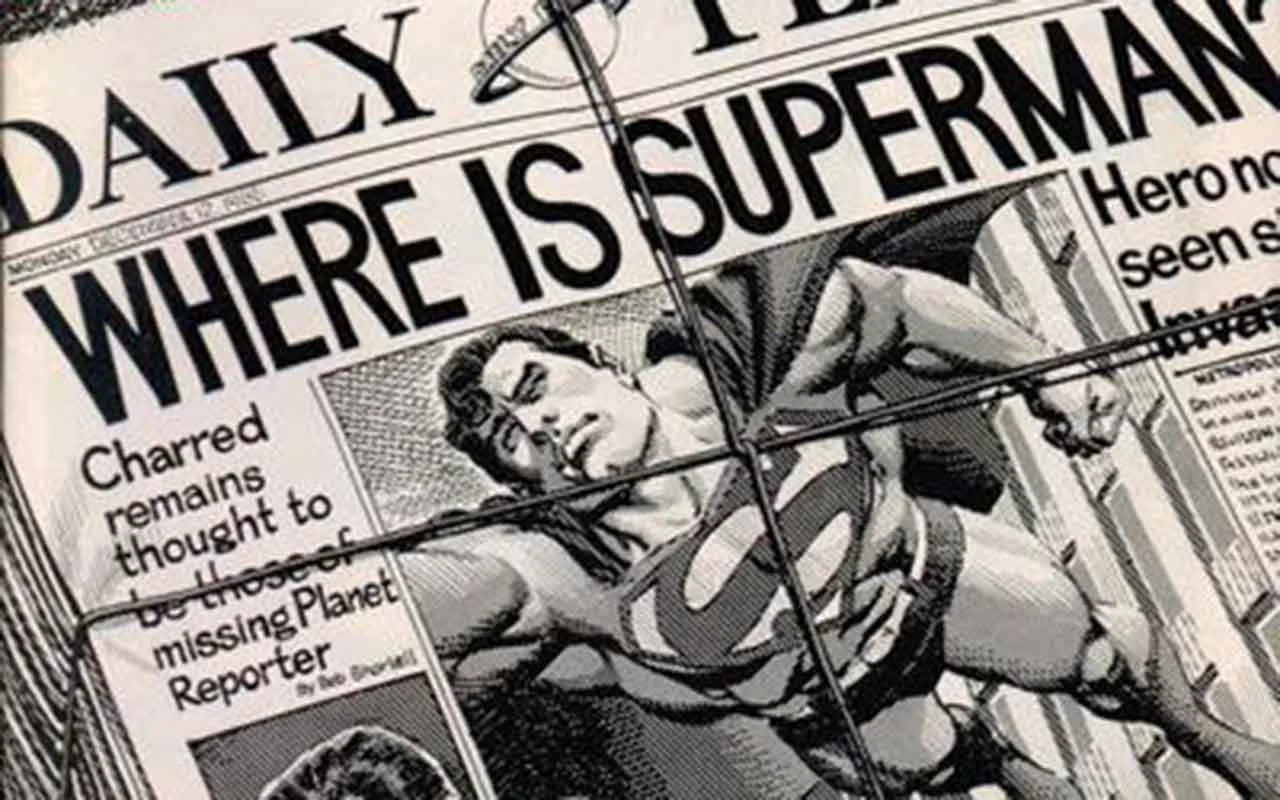
The most famous example, obviously, was the stories that happened following 1992’s The Death of Superman. It’s also illustrative of why removing Superman from Superman works so well.
After all, whether it’s Final Crisis or Knightfall or Spider-Man’s Clone Saga, there have been other heroes who left their own ongoing titles for a while, replaced by “pretenders to the throne,” so to speak. In general, though, audiences reject that new status quo pretty quickly. Yeah, you can get away with a “new” Green Lantern for ten years (since it was already an ensemble book by that point anyway), but Batman? He’s gotta revert back to normal sooner than later. There seems to be a higher tolerance for “losing” Superman for stretches of time, and that isn’t because his monthly readers don’t care about Clark Kent.
In our world, Superman is the first and greatest superhero — and that’s something that’s given a lot of narrative weight even within the universe of Superman’s stories. The Man of Tomorrow is the standard-bearer for heroes, a figure everyone else looks up to, and whenever he’s gone, he leaves a void behind.

In some comics, like Alex Ross and Mark Waid’s Kingdom Come, that void is the jumping-off point for the entire story. That’s where Funeral For a Friend, the storyline that followed Superman’s death, comes in.
Funeral For a Friend was explicitly designed to be about what the DC Universe looks like without Superman. In our world, there aren’t metahumans, but the character of Superman was created as a fictional stand-in for a real-world hero. It’s something that was explored in All-Star Superman, when Clark created a world in which he was never born, only for that world’s version of Jerry Siegel and Joe Shuster to create a fictional Superman instead. The notion that Superman, as an idea, is basically inevitable is something that permeates DC’s identity.
A presence that powerful creates an equally significant hole when it’s taken away, which is why “The Death of Superman” as a concept was powerful. It wasn’t just the big, exciting punch-’em-up story, but the fact that when Superman died, it set the stage for Funeral For a Friend, allowing the writers to interrogate what Superman meant to the world he left behind. In Superman #75, as he is dying, writer Dan Jurgens sets the stage for that story, talking about the impression Superman’s final moments was leaving on his friends, family, and allies.
Even before his death, Superman took to space in self-exile after killing General Zod, which led an alien being from a pocket universe to shapeshift into a familiar form inspired by the Man of Steel. That’s how we got the Supergirl who appeared in comics throughout the 1990s!

Other, later stories that center on Superman’s departure have wrestled with similar issues in a variety of ways. When “New Krypton” was set up on the moon, Superman left Metropolis behind to help them get settled. Mon-El was elevated to co-lead in the Superman titles and took on much of Superman’s earthbound responsibilities, which was a breath of fresh air for the titles but also gave readers a chance to see how Mon-El did things differently, and how he stood in the shadow Superman left behind. That Clark was just a phone call away at the time made things a little less dramatic, but just the fact that we would go an issue without seeing him was enough to make the era feel different.
We got something similar when Superman recently went to space, leaving his son Jon behind to be the Superman of Earth. Jon didn’t struggle in his father’s shadow as much (although that aspect was certainly there), but had to figure out how to make the mantle his own, and redefine the concept of “Superman” for a new generation. The character’s symbolic importance is arguably even more significant than his physical powers, which is why it’s always so interesting to see what happens when he goes away for a while.
It’s also why, at the end of the day, Superman will always return to a version of “normal.” You can take away his secret identity, change his powers, or even kill him — but that role Superman plays is that of a rudder keeping the DC Universe on track. Without the stability of the Man of Steel, the DC Universe looks different — and worse.
Comic Book Club Live Info:
Discover more from Comic Book Club
Subscribe to get the latest posts sent to your email.