









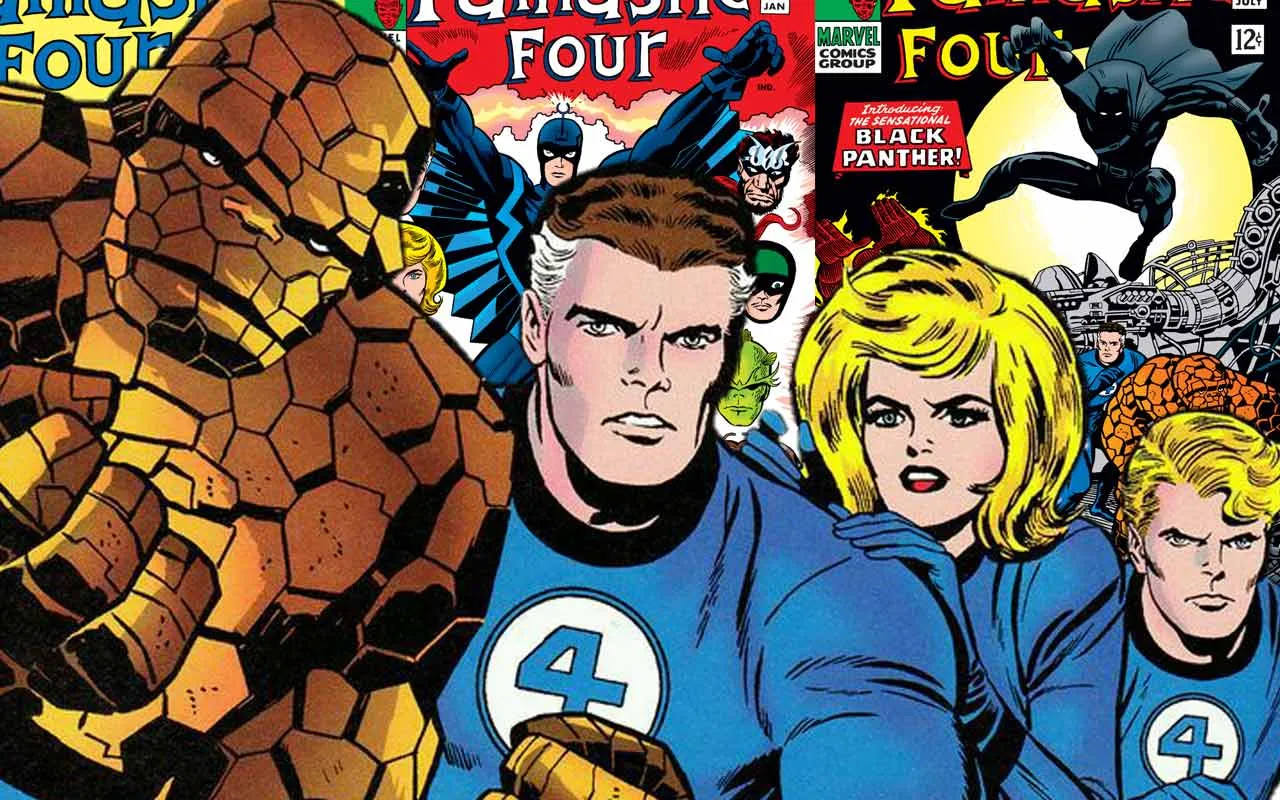
A rocket hurling towards space. A storm of cosmic rays. A failed mission. The lives of a family of four were forever changed that day, but so was the world of comics. Fantastic Four #1 was released in 1961, written and drawn by the talented hands of Stan Lee and Jack Kirby, marking the beginning of Marvel Comics as we know it today. The issue introduced us to a group of humans with extraordinary abilities: the smart Mister Fantastic, the charming Invisible Girl, the young Human Torch, and the hulking Thing.
These unlikely protagonists not only grew to become one of the most prominent superhero groups in existence, they also set the stage for the universe that would follow their debut. After all, the Fantastic Four weren’t your run-of-the-mill superheroes; they were first and foremost explorers. It was their first mission that began to unravel the oddities of their world with the arrival of the vengeful Mole Man, introducing readers to the monster-filled lair of Subterranea.
From that point on, the Fantastic Four became a doorway into their larger universe. Their adventures —often involving travelling to exotic locations, hopping through time, or exploring the vastness of space —set the stage for the creation of characters and fictional races that would grow and become impactful to the Marvel Universe. In a way, the Fantastic Four were more than explorers; they were world-builders. And here, we’ll explore seven ways the Fantastic Four expanded the Marvel Universe.
ATTILAN OF THE INHUMANS
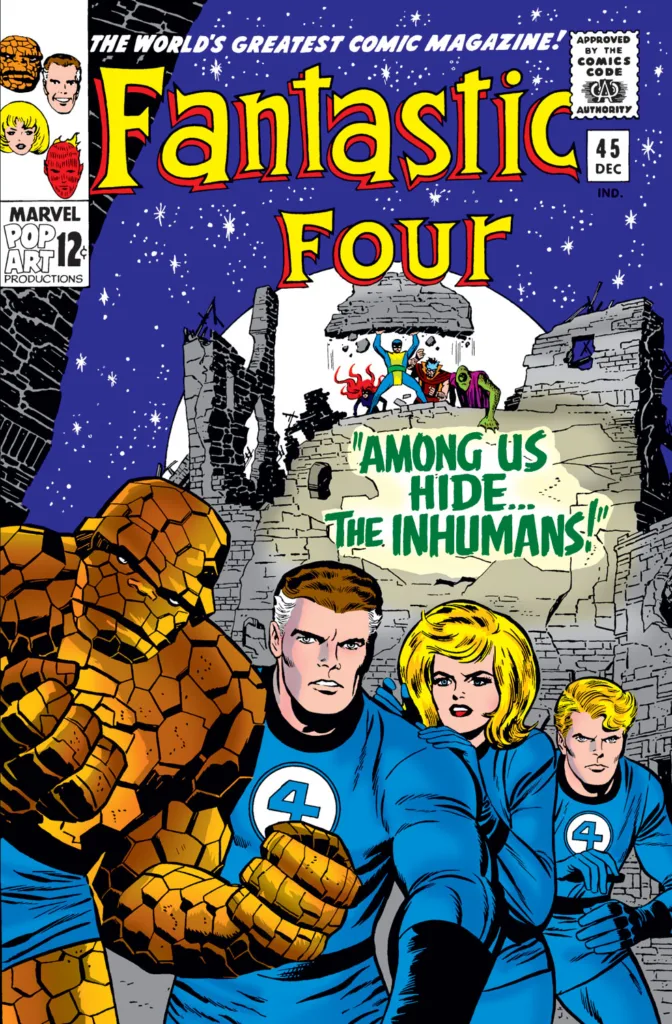
A hidden city of a superhuman people whose genes have been altered by extraterrestrial visitors. A king who can destroy mountains with a whisper. The Inhumans have been a part of the Marvel Universe for decades, but before their terrigen mists spread across the world, they were a royal family who lived in secret away from prying human eyes.
Fantastic Four #36 was the first time an Inhuman was seen, even before readers knew who they were. Medusa, their queen, had been recruited by the villainous Wizard to become one of the members of the Frightful Four, a group intended to bring an end to the Fantastic Four. It so happens that Medusa’s time as a villain was during a period of amnesia. She eventually had her memories restored and then returned to her Inhuman Royal Family in Fantastic Four #44 and the following issues.
The Inhumans eventually began to meet other superheroes and finally starred in their own series for the first time in 1975.
THE SKRULL EMPIRE
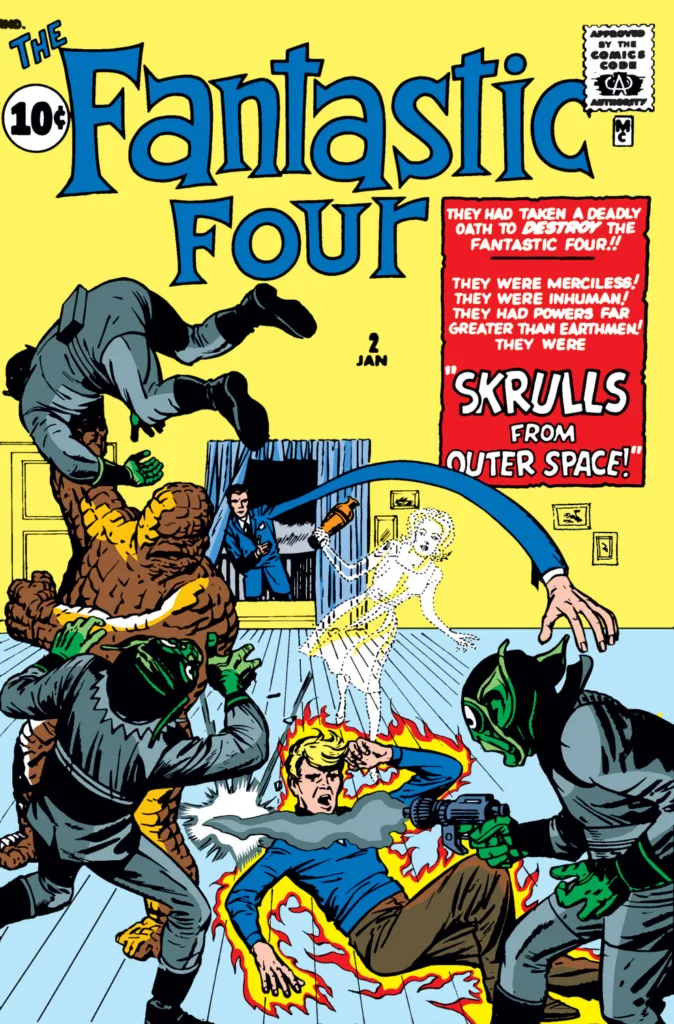
Fantastic Four #2 brought a threat not from the depths of the Earth, but from the far reaches of space in the form of the shapeshifting Skrulls. These aliens intended to invade the planet by first taking the Fantastic Four off the board. In order to do that, they sent out four Skrull soldiers masking themselves as the Four in order to commit crimes and turn the world against them.
Despite being defeated, the Skrulls returned later in Fantastic Four #18, becoming a recurring threat to the First Family. That issue also marks the first appearance of the Skrull homeworld Tarnax IV, as well as Kl’rt, the Super-Skrull.
With time, the Skrulls grew to become one of the largest and most important alien empires in the Marvel Universe. Their invasion of Earth in Secret Invasion was also one of the most impactful events in the history of modern Marvel, and it all began in Fantastic Four #2.
THE BLUE AREA OF THE MOON
While habitable portions of the moon have appeared in older comics by Marvel before, it was Fantastic Four #13 that first introduced the Blue Area of the Moon as we know it today. After examining the fragment of a meteor that had fallen on Earth, Reed Richards discovered it contained limitless energy, which he wanted to harness.
The Fantastic Four then travel to the Moon and discover the mysterious “blue area” is filled with ancient ruins. There, they meet Uatu, The Watcher, who ends up interfering in the fight between the Four and the Red Ghost and his apes.
The Blue Area of the Moon then became an important place in the Marvel Universe, not only for being the location of the Watcher’s Citadel, but also for being the stage for part of the Dark Phoenix Saga. For a time, it also served as the site of the Inhuman city of Attilan. The story of the ruins found in the Blue Area of the Moon was then explained as the origin of the rivalry between the Kree and the Skrulls in Avengers #133.
THE NEGATIVE ZONE
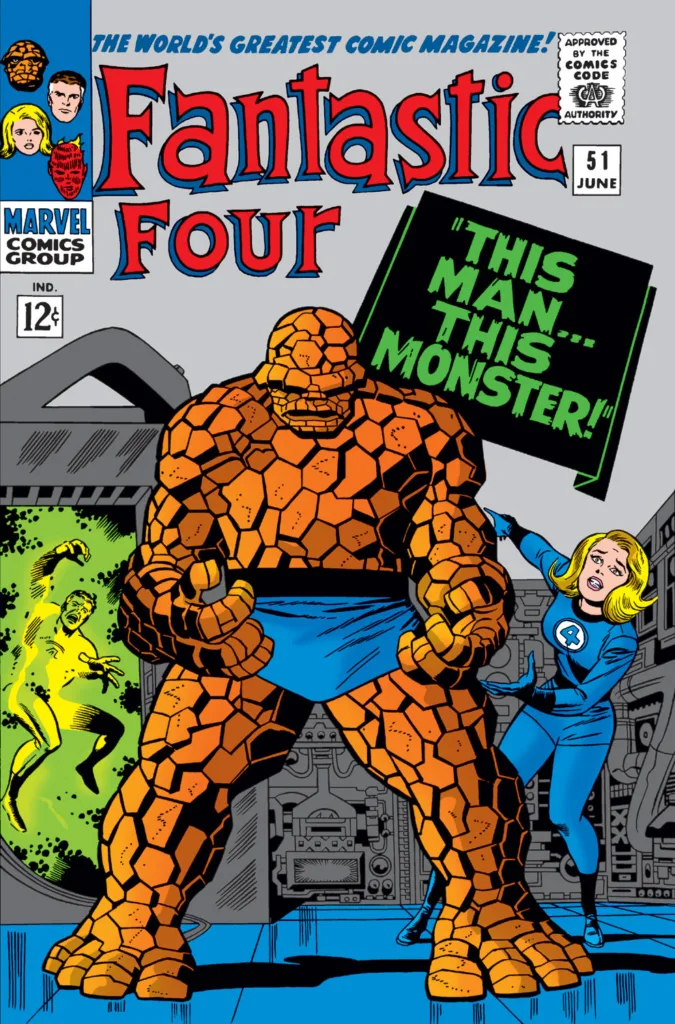
A wild dimension where positive matter is transposed into negative matter, the Negative Zone was once the location of Prison 42 during the superhuman Civil War, where non-registered heroes were kept until their trials. It was also from there that Annihilus brought his massive army and almost wiped out all the civilization of the universe in Annihilation.
But before those events, the Negative Zone had first to be discovered by Reed Richards in Fantastic Four #51 in the classic “This man… this monster!” story arc. While attempting to find ways to stop future menaces that would threaten Earth, Richards sought to master the space-time principle, leading him to a short venture into the Sub-Space—where the Negative Zone lies—to study its properties.
While his goal almost led to his death, Reed survived and kept monitoring and studying the dimension from afar, until the N-Zone became more threatening than ever with the debut of Annihilus in Fantastic Four Annual #6.
THE KREE EMPIRE
Another one of the Fantastic Four’s contributions to the wider Marvel Universe (through the hands of Stan Lee and Jack Kirby) came in the form of the Kree. The Kree Empire was considered one of the three most powerful intergalactic empires to exist.
But before the Hulking of the Young Avengers united the Kree and Skrull empires into one under his rule; before Carol Danvers became Ms. Marvel; and before the life and death of Mar-Vell, the Kree were a brief mention in Fantastic Four #64.
In that issue, two explorers had found a gigantic mechanical humanoid in a long-forgotten alien base on a Pacific island. The figure was a dorman Kree Sentry that awoke and attempted to resume his original mission until he got defeated by the Fantastic Four.
The destruction of the Kree outpost guarded by the Sentry caught the attention of the Kree in the following issue, with Ronan The Accuser traveling to Earth to sentence the Fantastic Four for their crime against the Kree and their Supreme Intelligence.
Due to those events, the Kree eventually sent a crew to Earth to finish the job Ronan couldn’t. That story happened in Marvel Super-Heroes #12 and it was the first comic book with a Kree—Captain Mar-Vell—as the protagonist. He would soon meet head of security Carol Danvers and the rest is history.
WAKANDA
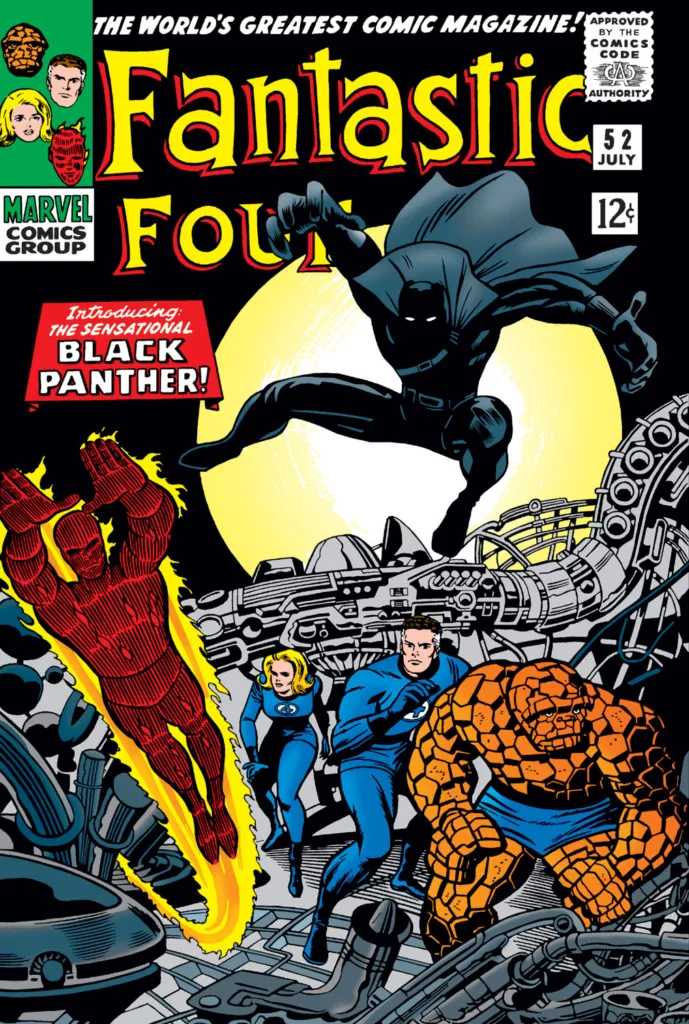
The noble king of an advanced nation, the Black Panther has become one of Marvel’s most recognizable characters. But before Wakanda had evolved into one of the major locations in Marvel, its first appearance (in Fantastic Four #52) was as a mysterious land in Africa whose chieftain had invited the Fantastic Four to be his guests in a hunt.
Upon arriving in Wakanda, the Fantastic Four discovered they were to ones to be hunted, with Black Panther managing to defeat and capture all four of them. It turned out the hunt was part of a self-imposed challenge by the Panther to test his skills and prepare himself for the return of his father’s murderer, Ulysses Klaue (aka Klaw).
Onced freed, the Fantastic Four confronted T’Challa, leading him to reveal his story. Finally, both sides united and fought Klaw and his mercenaries who sought to steal the nation’s vabranium.
From there, the Black Panther and Wakanda began popping up in other comic book series until T’Challa could lead his own stories in the pages of Jungle Action. Finally, the king of Wakanda got his own title, Black Panther, in 1977.
Comic Book Club Live Info:
Discover more from Comic Book Club
Subscribe to get the latest posts sent to your email.